Jack Daniel's Goes to War
Sazerac just dropped a $15 billion bomb on the bourbon world. Here's what it means for your whiskey cabinet.
April 17, 2026
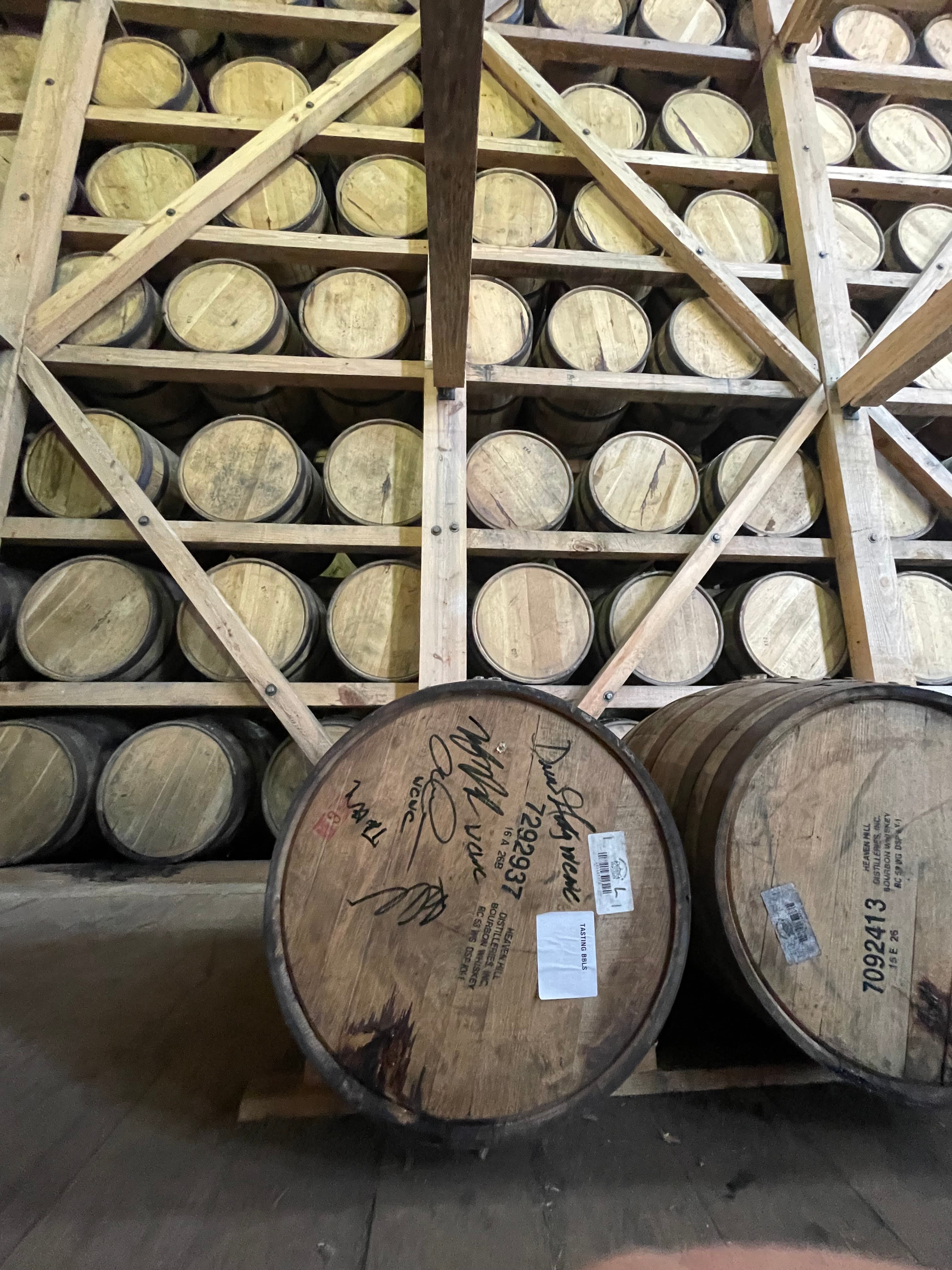
On April 15th, Sazerac — the privately held giant behind Buffalo Trace, Pappy Van Winkle, Blanton's, and roughly 500 other brands — launched a hostile $15 billion cash bid for Brown-Forman, the company that owns Jack Daniel's, Woodford Reserve, and Old Forester. If this deal goes through, it would create the single most dominant American whiskey company in history.
Two days later, bourbon people are still processing what this actually means. So let's break it down — not from a Wall Street angle, but from the perspective of someone who actually drinks this stuff.
What Happened
Sazerac offered $32 per share in cash for Brown-Forman, a roughly 8% premium over where the stock was trading. The move came just three weeks after Brown-Forman confirmed it was already in merger talks with Pernod Ricard, the French spirits conglomerate behind Jameson, Absolut, and The Glenlivet. That deal was structured as an all-stock “merger of equals” — the kind of corporate maneuver that lets the Brown family keep their voting control in a combined company.
Sazerac's bid is the opposite: all cash, full buyout, Brown family out. It's a power play, and it landed like a barrel falling off the top rick.
Why It Probably Won't Happen
Here's the thing most people miss: Brown-Forman isn't a normal public company. The Brown family — roughly 40 cousins descended from founder George Garvin Brown — controls approximately 67-70% of Class A voting shares through a dual-class share structure. Class B shares, which make up most of the public float, carry no voting rights. That means the family decides. Period.
And the family has signaled that they prefer Pernod's offer. An all-stock deal lets them maintain ownership and influence in the combined entity. Sazerac's cash offer would write them a check and show them the door. For a family that's controlled this company since 1870, that's not an easy pill to swallow — no matter how many zeros are on it.
The market agrees. Brown-Forman shares closed at $29.57 on the day of the announcement — well below Sazerac's $32 offer. That gap tells you traders don't believe this deal closes.
But What If It Did?
This is the fun part. Imagine a single company controlling:
Buffalo Trace, Pappy Van Winkle, Blanton's, Eagle Rare, Weller, E.H. Taylor, George T. Stagg, 1792 — plus — Jack Daniel's, Woodford Reserve, Old Forester, GlenDronach, Diplomático, Herradura.
That's the most allocated bourbon portfolio in America merged with the world's best-selling American whiskey. Together, the combined entity would control an estimated 30% of the American whiskey category. For context, the Beam-Suntory deal in 2014 — which was a $16 billion acquisition — didn't come close to this level of single-category concentration.
The Antitrust Problem
Even if the Brown family said yes — which they almost certainly won't — the FTC would have something to say. A 30% share of the American whiskey market is the kind of concentration that triggers serious regulatory scrutiny. The likely outcome? Forced divestitures of major brands as a condition of approval. And at that point, the strategic rationale for the deal starts to collapse.
Industry analysts at Morningstar and Brewbound have been blunt. “Antitrust and strategic hurdles” make this deal structurally unlikely. Even Sazerac's advocates acknowledge the path is narrow.
What This Means for Your Shelf
Whether this deal closes or not, the fact that it's happening at all tells you something important: the consolidation era in American whiskey is accelerating. The days of bourbon being a fragmented, family-run industry are ending. Capital is moving in. The question isn't whether the big players consolidate further — it's when and how much.
For enthusiasts, the practical implications are straightforward:
Allocated bottles get harder. Consolidation means fewer decision-makers controlling more of the pipeline. The same company that decides how many barrels of Pappy to release would also control Woodford Reserve Master's Collection and Old Forester Birthday Bourbon. Distribution gets tighter and more strategic.
Barrel programs shift. Right now, Buffalo Trace and Brown-Forman run independent barrel pick programs with different retailers and clubs. A combined entity would almost certainly rationalize those programs — fewer picks, more allocation-based, more points-driven.
Pricing holds or climbs. Scale reduces production costs, but consolidated companies rarely pass those savings to consumers. What you're more likely to see is price stability on core expressions and continued premiumization of special releases.
The Bigger Picture
Kentucky is currently sitting on 16.1 million barrels of bourbon — a historic surplus that's been building for years. Jim Beam shut down its main Clermont distillery for all of 2026. The secondary market for rare bottles dropped roughly 11% from its 2023 peak. And now the two largest bourbon producers in America are in a bidding war.
All of these signals point in the same direction: the bourbon industry is entering a period of rationalization. The boom is maturing. The players who emerge from this period — whether it's a Sazerac-Brown-Forman mega-entity, a Pernod-Brown-Forman global platform, or both companies staying independent — will define what American whiskey looks like for the next generation.
At WCWC, we're watching this closely because it directly affects how we source barrel picks, which distilleries we build relationships with, and what ends up in our members' glasses. The companies investing in quality and capacity — not just deal-making — are the ones we want to partner with long-term.
For now, the smart move is the same as always: drink what you love, buy what you can find at a fair price, and don't let corporate chess matches ruin your pour. The whiskey in your glass doesn't care who signs the checks.
Sources
Wall Street Journal, “Sazerac Offers to Buy Jack Daniel's Maker Brown-Forman for About $15 Billion” — April 15, 2026
Reuters via Yahoo Finance — Sazerac $32/share cash offer confirmation
Bloomberg, “Pernod and Jack Daniel's Maker Brown-Forman Confirm Merger Talks” — March 26, 2026
Brown-Forman Investor Relations — Press Release, March 26, 2026
Brewbound, “Sazerac Bid for Brown-Forman May Face Antitrust and Strategic Hurdles”
BevNET, “Sazerac Enters the Ring for Brown-Forman, But Analysts Are Skeptical”
Morningstar Analyst Report via Reuters — Kristoffer Inton on Pernod growth prospects
SEC filings — Brown-Forman dual-class share structure (DEF 14A)